Falcon Finance (FF): A DeFi Collateral Powerhouse Bridging Crypto and Real-World Assets
What is Falcon Finance (FF)?
Falcon Finance is a universal collateralization infrastructure protocol that enables users to deposit stablecoins, blue-chip crypto assets (BTC, ETH, SOL), and tokenized real-world assets like U.S. treasury bills as collateral to mint an over-collateralized synthetic dollar called USDf (in fact, it’s among the few protocols bridging crypto and tokenized real-world collateral).
Users can then stake USDf to mint sUSDf, a yield-bearing token designed to provide access to institutional-grade trading strategies, including funding rate arbitrage, cross-exchange arbitrage, and staking opportunities.
Falcon Finance markets itself as “next-generation yield” — offering transparency, security, and diversified strategies for traders, investors, projects, and exchanges.
What Problems Does Falcon Finance Solve?
Falcon Finance aims to:
- Unlock liquidity from a wide range of assets while preserving capital efficiency.
- Offer stable yields through sUSDf, backed by strategies that adapt to all market conditions.
- Provide flexibility with options for minting, staking, and restaking (fixed-term staking to amplify returns).
- Support institutions and retail by serving as a treasury management tool, liquidity provider, and yield source across ecosystems.
By bridging crypto and tokenized real-world assets, Falcon Finance positions itself as a collateral hub for DeFi and TradFi convergence.
Key Market Info
- USDf circulation: Over $1.5B USDf minted (as of September 2025)
- Reserves: $1.6B backing assets
- Monthly active users: 58,000+
- Chains supported: Ethereum, BNB Chain, Tron, XRP EVM
- Liquidity venues: Uniswap, Curve, PancakeSwap, Balancer, Pendle
These figures highlight Falcon Finance’s rapid growth since its beta launch in February 2025.
Falcon Finance Tokenomics ($FF)
- Total Supply: Not yet disclosed
- Circulating Supply at Listing: Not disclosed
- Community Public Sale: $4M allocation via Binance-backed Buidlpad platform
- Fully Diluted Valuation (FDV): $450M
- Public sale tokens: 100% unlocked at TGE, tradable immediately
- Fully Diluted Valuation (FDV): $450M
Utility of $FF:
- Protocol Access: Unlock features and premium utilities within Falcon’s ecosystem.
- Governance: Represent ecosystem value growth and allow holders to shape protocol direction.
- Ecosystem Incentives: Rewards for liquidity, partnerships, and active participation.
- Falcon Miles Program: Earn Falcon Miles by minting USDf, staking sUSDf, providing liquidity, or referrals. Miles can later be redeemed for $FF, airdrop rewards, or ecosystem privileges.
Why Trade Falcon Finance ($FF)?
Falcon Finance ($FF) has quickly emerged as one of the most talked-about projects in DeFi, combining strong institutional backing with real traction in just a few months. With its innovative dual-token system, deep liquidity across chains, and community-first approach, Falcon is positioning itself as a key player at the intersection of DeFi and traditional finance.
Here’s why traders and investors are paying attention:
- Strong backing: $10M strategic investment from World Liberty Financial (WLF), plus support from DWF Labs.
- Cross-chain ecosystem: Multi-chain collateral support, plus liquidity across major DeFi protocols.
- Proven traction: $1.5B+ USDf circulation and rapid user adoption in just seven months.
- Exclusive community sale: Hosted on Binance-supported Buidlpad, increasing credibility and reach.
- Dual-token stability design: USDf as a synthetic dollar and sUSDf as a yield-bearing token, creating clear utility.
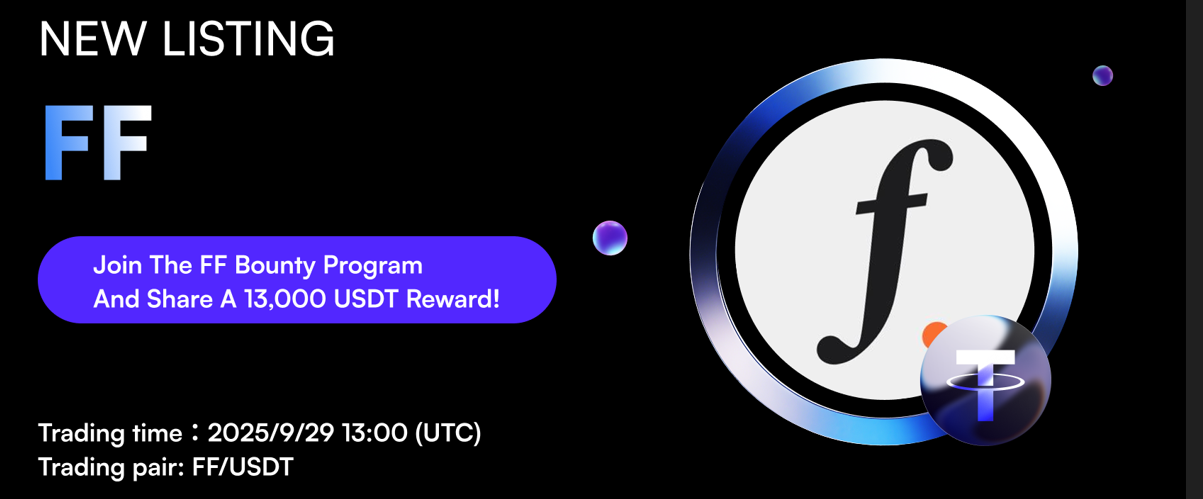
Falcon Finance Staking
Falcon Finance’s restaking model allows users to lock sUSDf for a fixed term to amplify yields. This provides flexible yield options beyond basic staking, making it attractive for both retail and institutional participants.
Future staking integrations with $FF are expected, particularly around governance, but details are not yet disclosed.
Conclusion
Falcon Finance is positioning itself as a universal collateral backbone for DeFi, with the potential to bridge traditional and digital finance. Its growth metrics, strategic partnerships, and innovative dual-token model make it one of the most watched projects in 2025.
While risks remain around regulatory clarity and token supply transparency, Falcon Finance’s strong momentum, multi-chain ecosystem, and potential Binance connection make $FF a token worth keeping on the radar.
You May Also Like

What Is Cartesi (CTSI)? Linux Rollups, Staking & Tokenomics
Discover how Cartesi (CTSI) uses Linux-based execution and application-specific rollups to scale blockchain applications. Explore staking, governance, tokenomics, and risks.

What Is Shentu (CTK)? Blockchain Security, Staking & Tokenomics
Discover Shentu (CTK), a security-focused Layer 1 blockchain. Learn about its CertiK origins, Security Oracle, staking, governance, tokenomics, use cases, and risks.

What Is Curve DAO (CRV)? Tokenomics, Use Cases & Risks
Learn what Curve DAO (CRV) is, how Curve Finance works, and how StableSwap, veCRV, crvUSD, and LlamaLend support DeFi trading, governance, and lending.